Logo

Evinrude VRO

mrelmo

New member
OK after much research, I will be removing the VRO on my 1995 70HP evinrude. It is over oiling the engine, when I start it, it smokes like a fog. So the boat is in storage for the winter I will do this when I bring it out. So kind of old school I remember the old fuel lines that are neoprene. I am thinking of going with the newer fuel lines that are clear with a thinner wall not sure the proper term for these lines. Has anyone have any experience with these lines, and the line from the tank to the fuel pump is one diameter and from the pump to the carbs is another what are the sizes I believe the tank hose is 3/8ths and the pump to the carbs is 1/4 is this correct. Thank you in advance.
 
Many folks do not understand the concept of a 2 stroke and how the lubrication works.----In my opinion the extra smoke at start up is NOT due to a faulty VRO.----In fact I think it means that the VRO is working fine.----A factory manual has details on how to test the VRO.----And a VRO is easy to take apart for inspection.
 
With the amount of work to remove the VRO and test it, I feel replacing it with a fuel pump and premix is called for. 2 reasons, if the VRO is good and I put it back in I don't know how long it will last, also everyone definitely says stay away from after market kits and a new rebuild kit is close to 300.00. There is a possibility that the VRO is good as one article states a fuel line with an air leak will cause less gas leading to excess oil in the mixing. But the fog on start up is really bad. So that is what I am leaning towards. If I was just to replace the fuel line from the tank to the VRO do you know the size of the line and what about the newer fuel lines That might be an alternate place to start. Thank you
 
With the amount of work to remove the VRO and test it, I feel replacing it with a fuel pump and premix is called for. 2 reasons, if the VRO is good and I put it back in I don't know how long it will last, also everyone definitely says stay away from after market kits and a new rebuild kit is close to 300.00. There is a possibility that the VRO is good as one article states a fuel line with an air leak will cause less gas leading to excess oil in the mixing. But the fog on start up is really bad. So that is what I am leaning towards. If I was just to replace the fuel line from the tank to the VRO do you know the size of the line and what about the newer fuel lines That might be an alternate place to start. Thank you
Good call. I went through the same issue a few years ago; excessive smoking on start up plus the engine was bogging past 3/4 throttle due to a lack of fuel delivery. My OMS pump had a failed fuel diaphragm and rather than repairing it replaced the entire unit. At the same time I replaced all the lines from the fuel tank up to the pump.

I believe the 70HP should have 3/8" fuel line. There is a HP break somewhere between 5/16" and 3/8" tubing, but I'm pretty sure the 70HP uses 3/8". Use a good USCG rated fuel hose and avoid the junk like the tempo fuel lines that have a plastic liner. Over time that liner can delaminate and the hose will suck flat internally. Clear lines are not recommended for a permanent solution because they are not USCG rated and will harden over time.
 
Oms the best version of the VRO pump. The cloud on start up will always be there. It happens because the fuel evaporates and leaves the oil behind.
 
There is also an oil recirculation passageway on you 70 HP.----And I have said it many times , lubrication on 2 strokes is not well understood.
 
Also these have a bad problem with oil tank caps not venting. Pressure will build due to heat went setting a long time and oil will push thru the VRO
 
OK let's talk about these 2 issues. Is there a new cap to replace with or is there a vent on the cap to clear, As to the oil passage where is it located in the VRO or the powerhead, if the powerhead where and how does it operate. Always willing to learn
 
If oil goes from tank to vro gets mixed in vro then to each carb, where would an oil passage come into play, even with a premix you make it sound like a separation of fuel and oil takes place so I'm a little confused. I really would like to understand this thank you
 
???----Oil separates from the gasoline as the gas vaporizes in the intake system.-----When motor is running / not running , oil drains off parts and collects in the bottom.----On start up and during running this oil is recycled to the top of the motor.----Remember that parts are lubricated by oil and not " blue smoke "-----Did I say that many folks do not understand these simple 2 stroke motors.
 
The cap has a one way rubber vent, the oil since it is a petrol product causes rubber to swell and not vent. The boat setting outdoors in heat causes oil tank to pressurize and fill VRO and carb with oil. Just replace with new
 
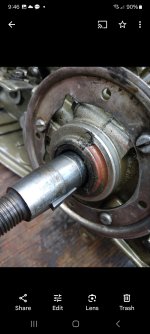
Yes I've run into the cap vent problem on a VRO many times. Drained straight oil out of float chamber too. Got photos here somewhere. Of course your not using ethanol, are you? That's how the diaphragm gets destroyed. Ethanol "resistant" VRO versions have been offered, but of course we should keep our ethanol in our Brandy.
 
NO ethanol, this motor only gets ran weekly during the season, so the gas sits a long time in the tank. Too many issues in the past with lawn equipment.
 
Some ethanol damage, brother. I just shipped the 1957 Johnson three horse out to California and the guy says it's extremely hard to find ethanol free fuel. He's third generation California and he said it is getting crazy out there. I suggested go to the airport and visit your friend with the Cessna and get a 5 gallon can and run that three horse for a year. Ha!
 

Attachments

  • Screenshot_20250215_095000_Photos.jpg
    Screenshot_20250215_095000_Photos.jpg
    796.8 KB · Views: 30
  • Screenshot_20250215_094600_Photos.jpg
    Screenshot_20250215_094600_Photos.jpg
    965.1 KB · Views: 32
  • Screenshot_20250215_090229_Photos.jpg
    Screenshot_20250215_090229_Photos.jpg
    633.5 KB · Views: 34
  • Screenshot_20250215_090343_Photos.jpg
    Screenshot_20250215_090343_Photos.jpg
    959.5 KB · Views: 26
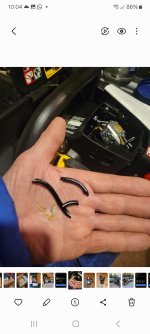
The little fuel tubes are made of inferior materials. I replace with tygon silicon....expensive, but a permanent fix.
 
Motor mounts, 9.9/15's. Nice, eh? How bout this new chainsaw. Yes, new.... The retailer must have test run it with ethanol. My brother won it in Miami at some sort of a raffle. Ha! Squeeze bulbs deteriorating from the inside out.
 

Attachments

  • Screenshot_20250215_100438_Gallery.jpg
    Screenshot_20250215_100438_Gallery.jpg
    821.7 KB · Views: 26
  • Screenshot_20250215_094549_Photos_T2aYCe7b0W.jpeg
    Screenshot_20250215_094549_Photos_T2aYCe7b0W.jpeg
    352.2 KB · Views: 36
  • Screenshot_20250215_094528_Photos_DJbOU5Gz5y.jpeg
    Screenshot_20250215_094528_Photos_DJbOU5Gz5y.jpeg
    232.6 KB · Views: 38
I'm really sick of ethanol repairs. This product has cost consumers, as well as the government trillions. If Musk wants to save money, he needs to focus a bit on our fuel and keep corn on the cob.
.
 
I'm kinda sick of ethanol repairs. This product has cost consumers, as well as the government, trillions. If Musk wants to save money, he should focus a bit on our fuel too and keep corn on the cob. Trump says "drill baby drill". Electric is fine, but doesn't work well for me in the middle of nowheretown Ontario.
.
 
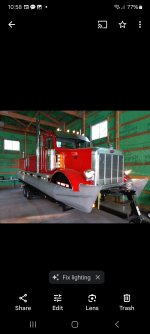
That fuel hose needs to be outlawed. This cost me a serious delay in late October, years ago, trying to get to our camp in NW Ontario. If my customers produce this hose on their fuel supply, they get it replaced. I ALWAYS, ask them to bring the fuel tank that they have been using. Often the plastic versions have leaked in water as well. Pontoon boats, with exposed plastic tanks are about the worst. Here is one of my customers. Pretty cool set up. He owns a trucking company, this was built by himself personality, all from scratch parts. Had a Tower of Power Classic Merc 90. He went modern Yamaha. Sounds like a sewing machine. The Tower is on my old Alumacraft now.
 

Attachments

  • Screenshot_20250215_095000_Photos.jpg
    Screenshot_20250215_095000_Photos.jpg
    796.8 KB · Views: 21
Ok so the only fuel lines that should be used are the old school neoprene with the thread that you can see in the side wall is that correct?
 
That will work but I prefer nitrile, more lifespan when exposed to gas/oil. Doesn't have to be fuel injection grade, which can withstand over 100 psi, that grade is not as flexible.
 

Attachments

  • Screenshot_20250215_110557_Google.jpg
    Screenshot_20250215_110557_Google.jpg
    219.3 KB · Views: 62
  • Screenshot_20250215_105820_Photos.jpg
    Screenshot_20250215_105820_Photos.jpg
    686.8 KB · Views: 36
Back
Top