Logo

J115PLSSB - Need tips on troubleshooting engine

Pel's Garage

New member
Hello,

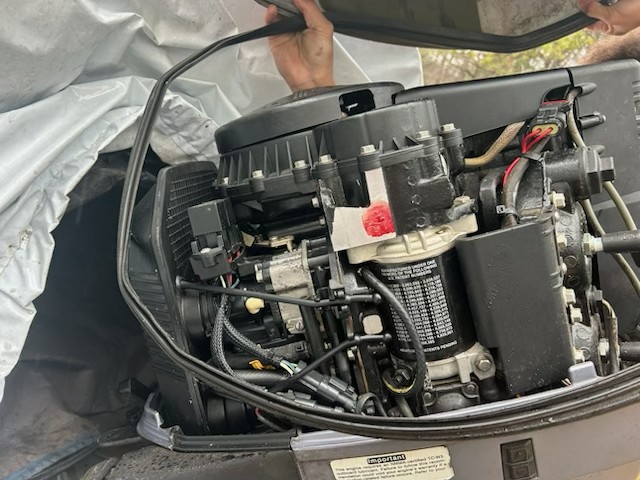
A friend of mine asked for my help with his boat engine. I usually work on modern cars, so I decided to do some research.

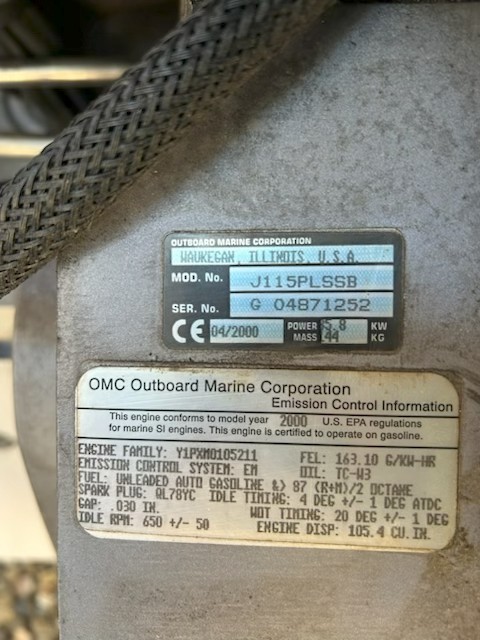
Here's what he has:
IMG_1817.jpeg


IMG_1934.jpeg


From my research so far, this is a carbonated engine. OMC is no longer around, was bought by Johnson.

Symptoms: engine starts but dies fairly quickly.


He said he was going to buy a fuel pump, so I advised him to find out what is the return policy as it may or may not be the fuel pump.

I figured it's going to be some sort of a fuel delivery issue, so either a pump, a fuel pressure regulator or the carb.

1. Any diagrams of the fuel system available anywhere?
2. Is the fuel pump fairly accessible?
3. Any tips on the carburetor? (haven't worked on carbureted engines)
4. What is a normal fuel pressure between the pump and the carb? (Psi)

I was going to check the basics first but given the engine does start, the battery has enough charge, a kill switch isn't malfunctioning.

Appreciate any tips and/or documentation.


Thank you.
 
Last edited:
OMC ( Johnson / Evinrude ) was taken over by BRP around 2001 or so.----They ( BRP ) stopped marketing the Johnson brand in 2008 or so.----They continued the Evinrude brand till 2020.-------The motor has 4 separate carburetors.----Post the actual compression values.----Clean the carburetors.----Clean the vapor separator.-----Do NOT rush out and buy a new fuel pump before testing and inspection !!
 
Follow Racer's advise and report back.

Compression - should be around 100PSI
Spark - All 4 should jump 3/8" gap on an air gap tester
Carbs - Too much to cover here, but they are pretty simple. When you get to them, make a separate post to guide through the cleaning and things to look for.
Fuel pump - Very easy to get to. Known as an OMS (oil metering system) pump and very reliable. Pulse diaphragm driven off crank case pressure and should make about 4-6PSI on the outlet side. The question will be if the oil side is still connected or if a previous owner did the usual freak-out, plugged the oil line, and went to pre-mix.
Ignition - This used the OIS 2000 ignition system. Very reliable and has the Fast Start feature which uses the port temperature switch to monitor engine temp and electronically advance idle when the engine is cold for easier starting and warm up. Use the CDI Troubleshooting Guide to run through the ignition system and make sure it's all good. Info on this V4 engine will start on page 69 of the guide.

All parts and diagrams can be found here --> 2000 Johnson 115 Parts Diagram
 
I have a subscription to emanuals, so I believe I got the correct manual for this engine series.

105.9 cubic inch is 1726cc, Year=2000

I got to chapter 3 (Fuel) and before that located the compression check section, this is what I see so far:

compression.JPG


2. Also, do these use the same sparkplug size as a car? 5/16" plug socket?

3. Another thing I read was to have a carb re-build kit on hand....

Next Steps: Once I get with the owner and see the engine, I will take more detailed pictures/videos and post here.
 
Last edited:
J115PLSSB. The SS in the model # says this is a 2000 model year engine. This link shows how to decode model #s --> Johnson-Evinrude Model # Guide

I've run compression checks on my engine both warm and cold with very little difference. It reads a little over 100PSI cold and a little over 105PSI warm.

The correct spark plug for this engine is a Champion QL78YC (938M) which uses a 13/16" socket. Do not use any other cross-referenced spark plug, only the Champion. The OIS2000 ignition system can run on other plugs, but some owners have experienced issues when using non-Champion plugs.

The carburetors and fuel chambers on these engines are made of plastic. The chambers were known to warp over time causing leaks at the gasket surface and the only true fix is to replace the chamber. People have tried to sand them flat, but there is a ridge molded into the mating surface to depress the gasket and sanding will reduce or remove that ridge. Carb Rebuild kits are available here --> Carb Kit # 0438996. The float chamber is Part #0433000. Please note the high speed fuel orifice is threaded into the lower part of the chamber behind the drain screw. If you replace the chambers, you must remove your orifice and install it in the new one. There is a BB pressed into the side of the float chamber, and this is to seal a passage that was drilled during manufacturing. Over time the plastic will shrink and the BB's will weep fuel. An easy fix is to clean thoroughly and apply some fuel rated JB Weld over the BB to seal it off.

I would also suggest you have Fuel Manifold O-Rings Part# 0335362 on hand (8 total required). When I rebuilt my carbs I had to pull the manifold tube on one side to get to everything. The O-rings didn't leak prior to this, but after disturbing them they wouldn't re-seal. You're dealing with 26 year old rubber so I'd say it's a safe bet to have them on hand. You might get away with buying one to take measurements and then source Buna-N (Nitrile Rubber) O-rings locally to match the diameter and thickness.

1771440416668.png
 
Back
Top