

Logo

Honda BF8A No Spark

rlawrence

New member
Honda BF8A, SN BZBC-1401877
First I cannot find the exact parts
diagram for this sn. Anyone that can please link; thanks.

I looked for posts here for "spark" but find little on this model. I have the proverbial "no spark" issue. Coil good. Pulled flywheel and everything "looks good", i.e. nothing obvious. Kill switch is ok and working properly. Neutral switch is closed in neutral AND forward, and open in reverse; don't what it is supposed to be in neutral is the first question.
Second question, is... how to test the other components without doing the replacement repair procedure. These old motor repairs can get costly quickly compared to value....
Looking for some valuable knowledge or links, not conjectures.

thanks
 
The wiring diagram indicates that the neutral switch is normally open. Try unplugging one side of the switch and re-test for spark.
 
Thanks!

I completely disconnected it and no spark. Same as kill switch. I do not know how to test other components in the ignition system. Usually in something like this I'd find a bad switch or something obvious. I still think I'm missing something obvious......

How do I know which model to use on that link? What is the "X" in the model? I don't have that on my engine. It stops at BF8A on the nameplate.
 
Has someone been working on this outboard? That's the first "simple" thing I want to know. As in, was something left unplugged or cross-wired?

The fact that the neutral switch is so obviously out of adjustment makes me suspicious right off.

I don't have any experience on that particular model and you said "no conjecture" so I have to say that most ideas I might have would be just that.

This isn't though:
The X in the parts descriptor line is a year break letter. Yours is a 1999...with an X.

If you look up a 1998, it will have a W.


If you look up a 2000, it will have a Y.


Those year breaks won't have any bearing on parts compatibility for that "series" or A model.

But in 2001 Honda introduced the D model and those are different animals with different components.

If you find that you need certain parts for the A model, as in; CDI, carburetor, pulsar or many others you will see that they are not only no longer available, Honda doesn't even list them anymore in some cases.
You will be relegated to finding used (on ebay most likely) or get lucky and find a donor motor nearby.

Sorry, but it is what it is.

Good luck.
 
The wiring diagram indicates that the neutral switch is normally open. Try unplugging one side of the switch and re-test for spark.
where do you find the wiring diagram?
Has someone been working on this outboard? That's the first "simple" thing I want to know. As in, was something left unplugged or cross-wired?

The fact that the neutral switch is so obviously out of adjustment makes me suspicious right off.

I don't have any experience on that particular model and you said "no conjecture" so I have to say that most ideas I might have would be just that.

This isn't though:
The X in the parts descriptor line is a year break letter. Yours is a 1999...with an X.

If you look up a 1998, it will have a W.


If you look up a 2000, it will have a Y.


Those year breaks won't have any bearing on parts compatibility for that "series" or A model.

But in 2001 Honda introduced the D model and those are different animals with different components.

If you find that you need certain parts for the A model, as in; CDI, carburetor, pulsar or many others you will see that they are not only no longer available, Honda doesn't even list them anymore in some cases.
You will be relegated to finding used (on ebay most likely) or get lucky and find a donor motor nearby.

Sorry, but it is what it is.

Good luck.

good stuff. So the neutral switch issue is just an adjustment? I do think that someone replaced the coil trying to figure it out and then maybe gave up..... looks like not original. but tests ok. No wires are unplugged that I can see....
Yeah, didn't mean not throwing out ideas by "no conjecture".... Sometimes people give ideas that are not even related. As an engineer all my life, I certainly appreciate "brainstorming", which is what I see you have in your mind.. Love the "ideas" threads..... Keep that coming....
Thanks.
 
Ideas?.Oh yeah! I am full of ideas! As a matter of fact, a buddy just told me the other day "dude, you're full of it!".

Anyway....

I don't know about that N switch being out of adjustment or just plain no good. I don't know either if, when in neutral, the switch should be open or closed. You've tested for spark with it disconnected (open) but have you bypassed it and tried completing that circuit to simulate closed?

Other than that, I would either start looking at voltage values from the exciter and pulsar coils or tracing wire runs for opens. In other words, both of those things eventually.

For example, check for continuity on the black/red wire from the emergency stop to the CDI terminal. Same on the black (ground) wire from that switch. It too goes to CDI.

These things have a ton of little bullet connections and any one of them can be unplugged or badly corroded. The CDI terminals are crimped and can come loose and also corrode.

I have an old B100/B75 series (10 and 7.5hp) shop manual and there is a two or three page supplement at the very back for the BF8A so they are very similar to one another. I can look there for some things like resistance and volts values and get back to you.

If you want an owner's manual (has the wire diagram) just Google "honda 8 horsepower outboard wiring diagram" and search down the list that comes up. A little ways down is an old pdf from Honda and has a picture of the owners manual. You don't even have to download it if you just want to open the file and have a look.

Good hunting....and um....fishing.
 
So, FYI, there is no way to check wires to CDI on this unit, as it is potted. :confused: I'm starting to suspect that is the issue....
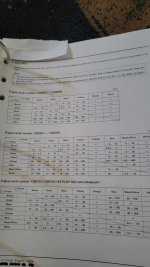
I guess I have to spring for a $50 manual to find out how to test the pulser and coil. Other than those, the wiring diagram clearly says it would be a CDI issue.... The both have impedance, though I don't know what is proper values yet.
 
anyone know where to find a CDI for this? found on ebay, but they guy won't provide any testing verification; he only says "it worked when i took it off" and "no returns/no guarantees" hard to shell out $200 he wants for a $500 motor if it was working....
 
"I have an old B100/B75 series (10 and 7.5hp) shop manual and there is a two or three page supplement at the very back for the BF8A so they are very similar to one another. I can look there for some things like resistance and volts values and get back to you"

Sill looking for document to test my CDI. Also, I can find a "new" CDI for the B75/B100 like you have, but not sure if it is the SAME as what I need. All these are "no return" , so cannot pay over $150 just to try it. Sure could use your help. You have had the best response of anyone since I started this months ago... "you are my only hope". ;)
 
Ideas?.Oh yeah! I am full of ideas! As a matter of fact, a buddy just told me the other day "dude, you're full of it!".

Anyway....

I don't know about that N switch being out of adjustment or just plain no good. I don't know either if, when in neutral, the switch should be open or closed. You've tested for spark with it disconnected (open) but have you bypassed it and tried completing that circuit to simulate closed?

Other than that, I would either start looking at voltage values from the exciter and pulsar coils or tracing wire runs for opens. In other words, both of those things eventually.

For example, check for continuity on the black/red wire from the emergency stop to the CDI terminal. Same on the black (ground) wire from that switch. It too goes to CDI.

These things have a ton of little bullet connections and any one of them can be unplugged or badly corroded. The CDI terminals are crimped and can come loose and also corrode.

I have an old B100/B75 series (10 and 7.5hp) shop manual and there is a two or three page supplement at the very back for the BF8A so they are very similar to one another. I can look there for some things like resistance and volts values and get back to you.

If you want an owner's manual (has the wire diagram) just Google "honda 8 horsepower outboard wiring diagram" and search down the list that comes up. A little ways down is an old pdf from Honda and has a picture of the owners manual. You don't even have to download it if you just want to open the file and have a look.

Good hunting....and um....fishing
 
Well sir,
If, indeed, I am your "only hope", then I would say the situation is grim.

Yes, all these old Honda CDI boxes are "potted" and, therefore, can't be physically interrogated by us mere mortals. I've hoped for a very long time that someone more clever than I would chop a couple up, backwards engineer the circuitry and then be so kind as to publish their findings. But, to date.....ain't happenin'.

I do know though that the resistance "test grid" published by Honda is useless. I know of many that are much smarter than I have arrived at the same conclusion having tried it themselves.

As a result, I would NOT purchase a manual just to aquire that "information".
But, if you want to give it a go, here's what I have. Hopefully it will load.
Good luck.
 

Attachments

  • 20240808_162122.jpg
    20240808_162122.jpg
    495.6 KB · Views: 82
You say the ignition coil is "good" but that it looks as though it might be a replacement.

This system is a "waste" spark" type that always fires both plugs simultaneously. When checking spark, both plug leads need to be connected to either a spark tester hooked to a RELIABLE ground or to a grounded spark plug. In other words, don't leave one lead open/disconnected as that doubles the resistance that has to be overcome.

I have ignition coil resistance values taken from a coil on a running B 100 engine.
With the test leads connected to each plug cap, I got 31.5k ohms.

The ignition coil primary winding resistance measured 0.8 ohms.

Both of those measurements differ from the specifications listed in the shop manual which are:
Primary resistance = 0.58 ohms

Secondary resistance measured through both plug wires = 8k ohms.

So, when it comes to the coil secondary resistance is much higher in my measurements.

Exciter coil resistance = 330 ohms.

Pulser coil resistance = 120 ohms.

I would at least verify these measurements before condemning and purchasing a CDI

What spark plugs does it have and what is gap?
 
You say the ignition coil is "good" but that it looks as though it might be a replacement.

This system is a "waste" spark" type that always fires both plugs simultaneously. When checking spark, both plug leads need to be connected to either a spark tester hooked to a RELIABLE ground or to a grounded spark plug. In other words, don't leave one lead open/disconnected as that doubles the resistance that has to be overcome.

I have ignition coil resistance values taken from a coil on a running B 100 engine.
With the test leads connected to each plug cap, I got 31.5k ohms.

The ignition coil primary winding resistance measured 0.8 ohms.

Both of those measurements differ from the specifications listed in the shop manual which are:
Primary resistance = 0.58 ohms

Secondary resistance measured through both plug wires = 8k ohms.

So, when it comes to the coil secondary resistance is much higher in my measurements.

Exciter coil resistance = 330 ohms.

Pulser coil resistance = 120 ohms.

I would at least verify these measurements before condemning and purchasing a CDI

What spark plugs does it have and what is gap?
good advice. i'll retest. The coil tested about what your numbers from what I recall. I tested pulser and exiter per some $50 access to info on boat us or something. Will retest those. Don't know what spark gap. Just boat new and installed per specs. son did that, so not sure they were set. what are they supposed to be? we didn't use a tester, just holding one externally grounded the way my daddy taught me on the farm. But, they may have been faulty due to motor rope start. will do that better too.

good advice. I'll start over.
 
Well sir,
If, indeed, I am your "only hope", then I would say the situation is grim.

Yes, all these old Honda CDI boxes are "potted" and, therefore, can't be physically interrogated by us mere mortals. I've hoped for a very long time that someone more clever than I would chop a couple up, backwards engineer the circuitry and then be so kind as to publish their findings. But, to date.....ain't happenin'.

I do know though that the resistance "test grid" published by Honda is useless. I know of many that are much smarter than I have arrived at the same conclusion having tried it themselves.

As a result, I would NOT purchase a manual just to aquire that "information".
But, if you want to give it a go, here's what I have. Hopefully it will load.
Good luck.
so as background, I'm an electrical engineer, so I know a little bit about ohm meters and impedances. this test document you provided, which I also found somewhere, is faulty. Hard to understand too. It actually suggested too that they 75/100 has the same CDI. Is that what your manual actually says? If so, I can find a cheaper CDI that fits those models and appears to have the same wiring connections/color coding.

On this chart, notice that the same value is not present "brown - black/white" vs "black/white - brown" and others similarly. That cannot be, as impedances do not have a direction. Also note that the chart even says which lead "+' or "-" to use for each. Completely in error to document such. Thus it makes the entire document suspect.

I was hoping to find a working CDI that I could bench test impedances and make my own chart to test mine, but no one will provide a return policy for only bench tested item. Dumb really.

I'll go back to square one and test all other components first. They I need to find out of the 75/100 hp CDI is interchangeable with the 8 hp. I know it is different part number, but seems the same externally and this document suggests it could be the same, though the heading on that bottom chart is also confusing about what motors it applies. most confusing thing I've ever worked on.
 
NGK DR 5HS plugs.

DR 4HS listed as "hotter" alternate to combat plug fouling.

If other brand is present, even Denso, use the NGK if at all possible.

Gap specification =.0.024" to 0.028"

Set them to 0.026"

No, the shop manual doesn't specify if the CDI's are different other than to list the outboard seria/frame numbers for testing. And, today, finding accurate part numbers for reference is difficult since they stopped supporting these many years ago. I suspect that any parts still available through Honda or it's outlets are NOS that is left in the warehouses.

The only thing I know about those charts is that they simply don't seem to match reality. No one I know that has ever tried using them could make any sense out of their results. That includes the FAMOUS hondadude of this site. He was THE go to Honda GURU for many years here and his word was GOLD.

I've always assumed that the "back~n~forth" test lead swapping was to test circuit diodes' condition although, that was never stated anywhere. I have wondered though if it was more about checking transistor states. I am NOT an EE nor anywhere near one so that's a question for you and your peers.

You have to remember, that was back in the early days of solid state ignition systems and it's highly likely they didn't fully understand what they had built either. They were probably getting electronic advice from a transistor radio manufacturer or something. IDK.

I had always intended on doing those tests with an old analog meter to see if it would make a difference but never did.

Back to checking spark....

It's not easy to provide a RELIABLE ground to the plugs for testing so pay particular attention to how you get set up for doing that. I use TWO 12 GA. wire jumpers with oversized , heavy springed jaw clamps to make sure the connections are as good as possible.

I do that so I can remove BOTH plugs and keep them grounded for testing. I do THAT so that the engine will pull over as easily as possible and the highest cranking rpm can be obtained.

The reason for that is because the voltage output on the exciter and pulser coils is dependent on rpm. An example of that is that I have measured in excess of 100 volts ac from an exciter coil on a running outboard and I have read that voltages in excess of 200 vac can be expected at higher rpm.

So, it's kind of a wonder these things start so well being pulled over by hand. If ANYTHING is hindering cranking speed, a less than hearty individual might not get the job done.

Also, when they do fire at low rpm, the spark can be very "faint".and extremely hard to see in daylight. Many times I have put a blanket or tarp over myself and the engine when trying to find spark before.

However, if you do get a spark...no matter how faint it seems...it is likely that it's enough to fire the fuel if all else is good. So, if you get ANY spark from both plugs, you may want to move on to other things as being the cause of a no start.
Just sayin'.

Good luck.
 
NGK DR 5HS plugs.

DR 4HS listed as "hotter" alternate to combat plug fouling.

If other brand is present, even Denso, use the NGK if at all possible.

Gap specification =.0.024" to 0.028"

Set them to 0.026"

No, the shop manual doesn't specify if the CDI's are different other than to list the outboard seria/frame numbers for testing. And, today, finding accurate part numbers for reference is difficult since they stopped supporting these many years ago. I suspect that any parts still available through Honda or it's outlets are NOS that is left in the warehouses.

The only thing I know about those charts is that they simply don't seem to match reality. No one I know that has ever tried using them could make any sense out of their results. That includes the FAMOUS hondadude of this site. He was THE go to Honda GURU for many years here and his word was GOLD.

I've always assumed that the "back~n~forth" test lead swapping was to test circuit diodes' condition although, that was never stated anywhere. I have wondered though if it was more about checking transistor states. I am NOT an EE nor anywhere near one so that's a question for you and your peers.

You have to remember, that was back in the early days of solid state ignition systems and it's highly likely they didn't fully understand what they had built either. They were probably getting electronic advice from a transistor radio manufacturer or something. IDK.

I had always intended on doing those tests with an old analog meter to see if it would make a difference but never did.

Back to checking spark....

It's not easy to provide a RELIABLE ground to the plugs for testing so pay particular attention to how you get set up for doing that. I use TWO 12 GA. wire jumpers with oversized , heavy springed jaw clamps to make sure the connections are as good as possible.

I do that so I can remove BOTH plugs and keep them grounded for testing. I do THAT so that the engine will pull over as easily as possible and the highest cranking rpm can be obtained.

The reason for that is because the voltage output on the exciter and pulser coils is dependent on rpm. An example of that is that I have measured in excess of 100 volts ac from an exciter coil on a running outboard and I have read that voltages in excess of 200 vac can be expected at higher rpm.

So, it's kind of a wonder these things start so well being pulled over by hand. If ANYTHING is hindering cranking speed, a less than hearty individual might not get the job done.

Also, when they do fire at low rpm, the spark can be very "faint".and extremely hard to see in daylight. Many times I have put a blanket or tarp over myself and the engine when trying to find spark before.

However, if you do get a spark...no matter how faint it seems...it is likely that it's enough to fire the fuel if all else is good. So, if you get ANY spark from both plugs, you may want to move on to other things as being the cause of a no start.
Just sayin'.

Good luck.
GREAT advice man. Very likely that I cannot be sure that I had enough RPM, so will take this advice and start over there. Disappointed that the impendence check didn't work out, as an electrical engineer, that was the easiest test for ME to confirm a good spark should be present or not. sad... I'll come back later and let you know how it goes. Thanks again for your time, I know it is valuable.
 
My pleasure.

I love these old twins and am always happy when someone is trying to get one going and take care of/use it.

The first one I ever saw and used....a 1970's 7.5 hp.... stole my heart immediately.

It was bright red, had breaker point ignition, started first pull every time and was SO QUIET!

A far cry from the cantankerous, un-Godly noisy 6 hp Chrysler Sailor kicker I had on my sailboat at the time.

BUT....that little Chrysler 2 stroke helped turn me into a REAL sailor because, I hated using it so much, I took it off the transom, lashed it down behind the companionway and refused to use it. That's when I truly learned how to handle a sailboat properly.

"Auxiliary?....we don' need no stinkin' auxillary!"

I ended up donating that outboard to a friend that needed one to take an outboard repair/overhaul class.

I refused to take it back when he was finished so I guess he sold it or passed it on to someone else. I didn't really care.

I would have HAPPILY hung that Honda on the stern though...

...had I been able to AFFORD one!

They were STUPID EXPENSIVE when they first came out!

But they sure as heck sold like hotcakes anyway and cemented Honda's foray into the outboard manufacturing business.

Sure wish they would change their minds about supporting them. I think there's probably still about a billion of them still running around the globe.
 
Back
Top