Waterboy01..... Even though you are pre-mixing your fuel/oil, you still need the warning horn to be operative for the possible problem of "overheating" and "fuel restriction", both of which unfortunately give forth the same warning... a constant steady "beeeeeppping", however that warning is enough to stop the engine to figure out which problem exists at the time. The alternatiuve to "No Warning" is to discover that the engine is overheating right after the engine comes to a sudden screeching halt and seizes up with smoke pouring off of it! The following may be of some use to you.
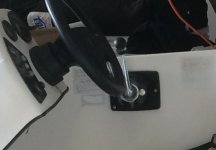
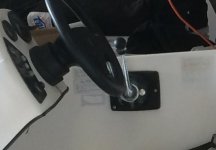
(Testing Warning Horn)
(J. Reeves)
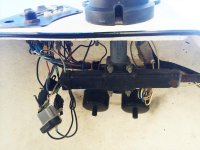
On VRO equipped engines where the VRO automatic fuel/oil setup is still being used, make sure that all components are connected as required. This would include the VRO pump wiring harness itself, the oil tank wiring, the overheat sensor(s), and if so equipped.... the vacuum switch that is standard to many V6 & V8 engines.
If the VRO automatic setup has been eliminated and has been disconnected properly, and the fuel and oil is being premixed, make sure that the overheat sensors are still connected, and the vacuum switch if the engine is so equipped.
On engines prior to 1984 which have no VRO setup, ignore the instructions pertaining to the VRO components, etc above.
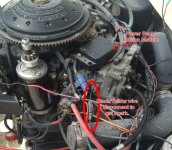
Turn the key to the ON position (Engine Not Running). Find the TAN wire at the cylinder head(s), then ground out the portion of that wire that is part of the engine wiring harness. If that Tan wire connector has the knife type connector where as it is exposed simply by sliding the rubber insulator back, it does not need to be disconnected.
Grounding that TAN wire should cause the horn to sound. If it does not, find out why as that's the only warning you'll receive should the engine overheat or have some portion of the VRO system fail, or have the engine encounter a fuel restriction if it is equipped with a vacuum switch.
********************
(VRO Horn Warnings)
(J. Reeves)
NOTE: I retired around 1991/92. Possibly some of the later V4 engines and others may also incorporate a fuel vacuum switch that would enable a fuel restriction warning to sound as mentioned below, an unknown factor to myself.
1 - A steady constant beep = Overheating - The V/6 engines, possibly some others, have a fuel restriction warning which is also a steady constant beep.
2 - A beep every 20 or 40 seconds = oil level has dropped to 1/4 tank. (Late model engine = Every 40 seconds)
3 - A beep every other second = VRO failure, air leak in oil line, oil restriction, (anything that would result in a lack of oil being supplied to the engine).
NOTE - If the warning horn is the black plastic (overpriced) three wire type horn, the warning horn should beep once when the ignition key is turned to the ON position. If it does not, it is either faulty or someone has disconnected it (a stupid move!). At any rate, if it does not beep which indicates that the horn is non functional, find out why and do not run the engine until the problem is corrected.
********************
(VRO Pump Conversion To Straight Fuel Pump)
(J. Reeves)
You can convert the VRO pump into a straight fuel pump, eliminating the oil tank and VRO pump warning system, but retain the overheat warning setup (and fuel restriction warning if so equipped) by doing the following:
1 - Cut and plug the oil line at the engine so that the oil side of the VRO pump will not draw air into its system. Trace the wires from the back of the VRO to its rubber plug (electrical plug) and disconnect it.
2 - Trace the two wires from the oil tank to the engine, disconnect those two wires, then remove them and the oil tank.
3 - Mix the 50/1 oil in the proper amount with whatever quantity fuel you have. Disconnect the fuel line at the engine. Pump the fuel primer bulb until fuel exits that hose with the tint of whatever oil you used. Reconnect the fuel hose.
That's it. If you want to test the heat warning system to ease your mind, have the key in the on position, then ground out the tan heat sensor wire that you'll find protruding from the cylinder head. The warning horn should sound off.