Rick, what do you mean by this statement? "
I would steer clear of heavy loads in the 2,000 to 3,000 RPM range." Do you mean load as in passengers and weight?
No.... loads as in engine loading.
At between 2,000 and 3,000 RPM, most hulls are above "hull speed" and yet are below "planing speed".
It is an inefficient speed to be operating at, and is a range whereby detonation is more likely to occur.
Can you define Hull speed?
Hull speed or displacement speed is the speed at which the wavelength of a vessel's bow wave is equal to the waterline length of the vessel.
In other words, it is the speed at which the hull is not yet ineffectively pushing massive amounts of water.
Each hull is different.
I assume Planing Speed is the speed at which the boat achieves plane.
Yes, it refers to the hull's attitude.
It is most efficient at slightly above the attitude at which the hull begins to plane out.
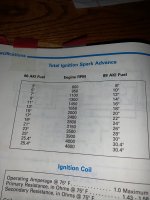
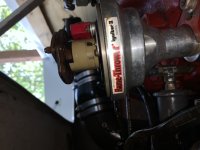
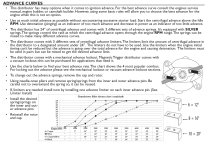
Pertronix got back to me with an attachment, I tried to upload but unsuccessful so I pasted of couple screenshots. If you know why let me know, the file size is 1.2MB. Maybe file is too large...
Go to "Tiny Pic dot com" and reduce the size.
With the silver springs, the distributor offers ~23 degree advance (estimating from chart) at 3200 RPM. Adding to a base of 8 degrees, that should result in total timing of
31 degrees BTDC total timing 3200 RPM.
with your math, those numbers would appear to be correct.
However, with a build using what are most likely the GM Full Dished pistons, I would cut this back to 28/29 degrees @ 3,200 RPM.
The fuel quality (octane rating) will influence this also.
I would never swap springs under the guise that each spring kit offers a curve of a certain value.
As well intended as the company may be, the governing spring values may not be consistent.
This is where the Sun, Allen or King machine comes into play..... or, you do an "On Engine" test and plot the curve out on graph paper.
Any needed change would require tweaking of the spring supports.
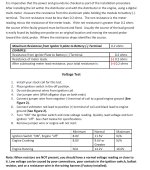
I found another nugget in the Pertronix documentation that would seem to open another can of worms. I'd rather not explore it but for the sake of education and full disclosure, I'd like your thoughts. I did replaced my ESA module a couple years ago. The symptom at the time was the engine would start sputtering and cutting out at higher RPM, I don't recall the brand, I may have even posted on this forum. Anyway, my boat has never had the diodes or resistors per the Pertronix instructions.
Early on, the "diode fix" was used (Stewart Hastings goes into deal on this).
Later, an ESA module came out for use with electronic ignition systems.
Pertronix offers wiring
specifically for OMC Sterndrives using diodes and resistors
. I'm not going to bother with the diodes and resistors until I confirm my TDC mark and observe the total advance at 3200 to 3500 RPM. I'm unsure if the OMC wiring if for Pertronix Coils specifically or for all coils. I have a reply into Pertronix asking for clarification.
I believe that Pertronix recommends a certain ignition coil for their systems.
Do I adjust the distributor until I get the desired total timing at a specific RPM?
Yes... but keep in mind that this may affect where your BASE advance is.
Remember...... with a mechanically advancing system, any change to BASE creates an equal change to the TA, and visa-versa.
- I follow the Pertronix chart below, the advance at 3200 RPM is maybe 23 degrees? Adding base timing of 8 degrees for a total of ~31 degree Total Advance @ 3200 RPM. Like said, I would cut this back to 28/29 @ 3,200 RPM.
- The OMC Manual shows advance of ~26 degrees @3130 RPM, Adding base timing 8 degrees for a 34 degree Total advance at 3130. I guess you could roll the dice!
I am more inclined to use the Pertronix data since that is the distributor that I have.
Hypothetical:Assuming I use Pertronix values, is the action correct?
- Observed a timing at 3200 RPM is 34 degrees BTDC. In my opinion......... unless your engine was built with a Q/E combustion chamber and used with high octane fuel, that would be excessive!
- Action: Retard Timing at 3200 to 31 degrees. Perhaps still a bit excessive!
- If I retard timing at 3200, I assume timing will also be retarded at idle. Correct. As noted above, with a mechanically advancing system, any change to BASE advance creates an equal change to the TA, and visa-versa.




 mad:trying to post my engine timing specs,I find this site frustrating when trying to post pics. Sometimes works like a charm and sometimes it appears to upload and nothing happens. Not sure if it my machine or the ME site.)