Logo

83 90 hp johnson

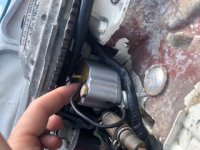
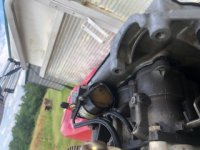
I had all these unhooked but I hooked them back up like they were. I also had the stator unhooked. Everything look like it's screwed back in the right place?

Hopefully not "all" unhooked at the same time? That is, unless you made notes, took pictures, have a service manual with a diagram! Wrong wiring would be a good reason for the fuse to blow.

Tim asked what the ampere of the fuse is... not its location. Look closely at the metal portion of the fuse for the amp capacity.
 
my trim and tilt motor wires were cut in half and the ends were exposed. I'm thinking they were touching and shorting out. I got them taken care of now and it crank 10 or do times without blowing so hopefully that was it.
 
20amp sorry I thought I put that with the picture. No I Un hooked the 1 at a time. I looked at the diagram online it all looks right.
 
20amp sorry I thought I put that with the picture. No I Un hooked the 1 at a time. I looked at the diagram online it all looks right.

Glad to hear that. Some others have done the opposite, thinking they'd remember that small detail of this goes here, that goes there.... BLOOEY! Uh Oh... what was that? :)

The fuse... Yeah, 20 amp is the proper size.
 
The fuse doesn't control the trim/tilt......so probably cooking the fuse when it starts. Wiring is probably not correct. Looking at pictures I honestly can't tell for sure. Can you find a schematic on CDI Electronics free on line manual? Racer, Joe, what do you think? See post #60.
 
Last edited:
I found this diagram. By looking at it everything I unhooked is wired back correct.
 

Attachments

  • 068590DB-E8AA-4D62-A6B1-0DB8C347DD2E.jpg
    068590DB-E8AA-4D62-A6B1-0DB8C347DD2E.jpg
    105.9 KB · Views: 122
Fuses blow because you have a short somewhere.-----Bare wire touching metal , that sort of thing.-----Wiring INSIDE the harness touching each other due to heat damage.----Up to you to find it.

Tim... This, authored by "racerone" of course is what you referred to.

Yes... Fuses cannot tolerate positive voltage leading directly or indirectly to a voltage ground, and should that exist, (short), fuses would blow one after the other. A indirect short would include a failing electrical component (usually a starter) that still functions but is drawing excessive amperage... a tell-tale sign is normally the excessive heat the component emits... and often the smell of an electrical fire.
 
Tim... This, authored by "racerone" of course is what you referred to.

A indirect short would include a failing electrical component (usually a starter) that still functions but is drawing excessive amperage... a tell-tale sign is normally the excessive heat the component emits... and often the smell of an electrical fire.
.

OK so since it's not blowing all the time I need to test the starter voltage? I'm going to go over all the wires and make sure none have any bare spots touching shorting out also.
 
The starter itself is NOT part of that fuse circuit !!
OK what about the voltage regulator is it part of the circuit? This is the voltage regulator right? Or you just think it's a wire grounding out somewhere?
 

Attachments

  • 4ECC1CEE-5830-4C1E-BBA6-0B11F5596F18.jpeg
    4ECC1CEE-5830-4C1E-BBA6-0B11F5596F18.jpeg
    47.8 KB · Views: 102
I've checked over all the wires I didn't see anything. It seems like it's only blowing the first time I crank it when I have to choke it. Once it starts the first time it don't blow anymore. It don't blow instantly just when Im trying to start it for more than a few seconds
 
Last edited:
Maybe it's the solenoid. What you think, Racer? This fuse isn't part of the starting, right! The choke, enrichening solenoid I'm thinking. That's the connection here....maybe???
 
Can you tell from these if anythings wired up wrong
 

Attachments

  • DAFEA06C-CA0B-4695-A52F-BA8692915A45.jpeg
    DAFEA06C-CA0B-4695-A52F-BA8692915A45.jpeg
    35.1 KB · Views: 120
  • 3843BE11-FDAE-4E35-815F-8CA8FE29CEAB.jpeg
    3843BE11-FDAE-4E35-815F-8CA8FE29CEAB.jpeg
    42.4 KB · Views: 111
  • 26E933B7-2CF8-449B-85A7-AAD7D1D63222.jpeg
    26E933B7-2CF8-449B-85A7-AAD7D1D63222.jpeg
    38.9 KB · Views: 101
According to this diagram the yellow wire coming from voltage regulator was supposed to screw into the first screw on the terminal board. I had it on the second screw. I changed that but do you think this caused the problem? Does that have anything to do with that fuse? I just answered my own question. That wasn't the problem just tested it out
 

Attachments

  • 1AC961C3-A1BF-4A10-8B6D-5079B9740A8B.jpeg
    1AC961C3-A1BF-4A10-8B6D-5079B9740A8B.jpeg
    62.8 KB · Views: 127
Last edited:
Good, what I'm suggesting is that the solenoid may be drawing too much current. The fuse seems to blow when you choke it while cranking? When the fuse blows it wont crank over anymore right? Perhaps the solenoid that activates the starter is drawing too much current, could be either one.
 
Yes the fuse is blowing when I choke it while cranking. After it blows it won't turn over. I tried it without pushing in on the choke on the key switch or lifting the lever in the start position. It Crunk up without blowing then.
 
Good, what I'm suggesting is that the solenoid may be drawing too much current.
So what would be causing the solenoid to draw to much current? A short? Sorry probably a dumb question but I don't know a lot about electrical
 
Last edited:
Took it out today and started it without pushing the key in to choke it. Started up and didn't blow the fuse. Stopped several times and it started back every time without blowing the fuse. So it's something to do with the choke.
 
Right. There is a way to test the resistance in the choke solenoid/coil with your multimeter. But now that I think about it more there is likely a current draw or partial short when your key is pushed in to activate the choke. Disconnect the wire to the choke and then try it again (to choke while cranking). I bet the fuse will blow. That means the ignition switch is bad or a partial short in the wire that goes to the choke from your ign. switch. To determine which it is you can leave the wire disconnected from the choke and test for any continuity to ground with BATTERY DISCONNECTED. Should be completely open. Next push in the choke activation with key in ON POSITION. Should still be open. If continuity to ground is indicated, however, only when key is on and choke in activated position, then we know it's in the ignition switch (key).
 
This is simple diagnostics but maybe I made it sound harder than it really is, but we must be getting some continuity to ground, or too much resistance when your choke is activated. Be sure when using your ohms scale, that the battery is disconnected. We don't want you to injure your multimeter.
 
This is simple diagnostics but maybe I made it sound harder than it really is, but we must be getting some continuity to ground, or too much resistance when your choke is activated. Be sure when using your ohms scale, that the battery is disconnected. We don't want you to injure your multimeter.
I still havent had a chance to mess with it ill let you know what I come up with after i test it. Thanks
 
I still havent had a chance to mess with it ill let you know what I come up with after i test it. Thanks

Easy test.... Remove the wire from the primer solenoid, temporarily taping the wire terminal to keep it from shorting out anywhere.

Now, when starting, push the key in purposely (which will do nothing as it's disconnected). If the fuse does not blow, the solenoid requires replacing..... If the fuse does blow, the wire itself is shorted somewhere.
 
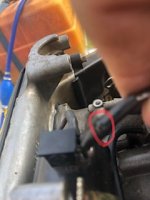
Finally got a chance to look at the boat. Im pretty sure I found my problem. The metal end on the solenoid power wire was touching the bracket that holds it on place. I guess when I was tightening it up it turned and exposed some of the metal. I couldn’t see this while looking at it but when I went to unhook the power wire to do the test yall told me I found it.
 

Attachments

  • 2FA75CD6-0DF5-48BB-B80A-9E8324A0BFFB.jpeg
    2FA75CD6-0DF5-48BB-B80A-9E8324A0BFFB.jpeg
    35.7 KB · Views: 146
Last edited:
Back
Top