Logo

Volvo Penta Starter identification

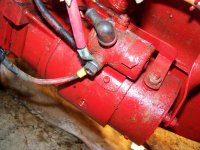
I'd like to replace my starter or rebuild it. It's a 1982 VP 5.0 litre Chevy engine. All the starters I see for sale dont look like mine. Mine has the solenoid mounted on the body of the motor. It doesnt "lever" the gear.... this starter must be a centrifugal activated gear. I would prefer to replace with like kind seeing's how this one lasted 31 years! If I can find a West Washington rebuilder that would be fine... if he can get parts!
Can anyone identify this starter? I need to buy parts to rebuild it or possibly a starter and solenoid. Pic attached.
 

Attachments

  • 100_1891.jpg
    100_1891.jpg
    81.4 KB · Views: 2,130
I would start taking it to a starter repair shop and see what they can do. If too old to find parts (which I seriously doubt), it won't hurt replacing it with a newer model (it will probably cost you less that 200 bucks). I appreciate you haven't had a problem with your current starter for the last 31 years, but do you really intend to keep your boat for 31 more years? This of course does not mean the new starter won't last for so long. :)

Cheers.
 
That is an old Prestolite, Delco or Arco "Bendix" style starter motor.


And yes, you are correct, there is no solenoid kick out mechanism.... there is a contact solenoid only.

These rely on quick armature torque to kick the Bendix drive into the flywheel ring gear.
If you've ever noticed, a low battery will not allow a Bendix motor to kick the pinion gear out.

Honestly, I'd not spend a dime on it, although you can find parts for them, and most good shops would be able to over-haul it for you.

If this was my engine, I'd replace the Bendix motor with one of today's HTGR/PMGR starter motors.
The HTGR/PMGR starter motor armature spins approximately 3 X's faster, and with the planetary style gear reduction, these will crank your engine over a bit faster, and will also draw fewer amps.

With your AQ series SBC Volvo Penta (153 tooth flywheel ring gear), you'll need the motor with the straight across bolt pattern.

Be sure to get the correct length bolts for the nose housing.

images


Here's another option in a higher quality version.
This one uses a pinion gear reduction. These are also a bit more expensive.


While these little HTGR/PMGR motors may look whimpy, don't underestimate them. They'll typically kick A$$ over the older style motors.

Don't get me wrong.... the old Bendix drive motors were heavy duty and were well built, but the technology is just not up to parr these days. You'd be hard pressed to find a Bendix style, or even a non-gear reduction motor, being used as OEM today. Most all have gone to the gear reduction motors.


.


 
Last edited:
I guess I should upgrade. I'm sure the real reason for the new style lightweight starters are to meet the fuel economy requirements in vehicles... not necesarily because they will be better, or last more than a few years. But time will answer that question! I guess the question is "how long will they Kick A**" ! Speaking of "Marine Grade" starters.... are the $80 marine grade ones like on Ebay any good? I think there is a plate inside a marine starter to keep fumes out (supposedly). I wonder if I couldnt just buy a Chevy starter at NAPA and take it apart and put the plate out of mine in it... HaHa... I bet that's been asked a million times....
 
OK, I've got a new modern starter on the way. question is wiring... My old centrifugal starter (see pic start of thread) has two small terminals and two large terminals. One large terminal is conected to the starter internals with a flat strap. The solenoid simply activates the motor, essentially a switch.
The new starter has two large terminals and two small terminals. One large goes to starter internals. The solenoid on it engages the gear. Really not sure how to wire it. The one large terminal is pretty obvious, does it matter which wires go to which small terminals? I imagine it does....
 
Last edited:
Got the "new technology " starter in the boat finally. What a bitch! My body still aches from the job. The one I have looks like the top photo in Ricardo's pics above , only mine is coated. It's a marine starter. The starter makes no sounds and doesnt do anything about 3 times out of 10 when I try to start the engine. No clicking, no nothing. Damn this new technology is great! Looking for someone to rebuild my old Bendix drive starter now.... or If I can find parts I'll rebuild it myself...
 
The wiring on the small terminals will be different from your old system.

The wire from the KEY SWITCH's "S" terminal goes to the new starter solenoid's little "S" terminal. (yellow with red stripe wire if your harness follows the BIA standard.)

Also, make sure BOTH battery cables are clean and tight and the battery is fully charged.
 
Got the "new technology " starter in the boat finally. What a bitch! My body still aches from the job. The one I have looks like the top photo in Ricardo's pics above , only mine is coated. It's a marine starter. The starter makes no sounds and doesnt do anything about 3 times out of 10 when I try to start the engine. No clicking, no nothing. Damn this new technology is great! Looking for someone to rebuild my old Bendix drive starter now.... or If I can find parts I'll rebuild it myself...

Before you do that, take a look at your electrical connections. These connection corrode with time they are in the worst possible location on the boat. I've seen the eylets corode between the wire and the eyelet already.
The other thing to look at is your starter relay. These crap out as well. If you turn the switch and get nothing, make sure your engine compartment is well ventilated and jump the large post to the small post. If it turns over, it is defiantly your wiring or relay.
 
OK, thanks. batteries are up at about 12.7 volts (resting voltage) is the starter relay the breaker with the push knob? (top engine mounted) I'l double check the wires, but just got through cleaning all terminals etc when I did it. as it works about 70% of the time, I imagine the wires are routed properly.
 
OK, thanks. batteries are up at about 12.7 volts (resting voltage) is the starter relay the breaker with the push knob? (top engine mounted) I'l double check the wires, but just got through cleaning all terminals etc when I did it. as it works about 70% of the time, I imagine the wires are routed properly.


No the breaker is just that an overload breaker. The starter relay will be a cube about 1" x1"x2" it should be located near the breaker.
Sometimes older units are slightly larger cylinder shaped relay.
 
Swiveltung...............

I guess I should upgrade. I'm sure the real reason for the new style lightweight starters are to meet the fuel economy requirements in vehicles... not necesarily because they will be better, or last more than a few years.
Every auto maker has been using HTGR/PMGR technology for years now. Chrysler Motor Co. has been using these since the late 50s.
As said earlier....... the armature turns approx 3 X's faster than the Non-reduction motors, and with the GR, much more torque is placed against the engine flywheel.
In most cases, t
hese HTRG/PMGR starter motors will outperform the old Bendix motors about 2:1, if not more.

Make dang sure that you used the bolts that were provided with this new motor. The nose housings will require different length bolts.

But time will answer that question! I guess the question is "how long will they Kick A**" ?
These should for their entire life!


Speaking of "Marine Grade" starters.... are the $80 marine grade ones like on Ebay any good?
Some are...... some may not be. The better units use all steel reduction gears.


I think there is a plate inside a marine starter to keep fumes out (supposedly). I wonder if I couldnt just buy a Chevy starter at NAPA and take it apart and put the plate out of mine in it... HaHa... I bet that's been asked a million times....
If you had an issue, your insurance company inspector will be savvy to this.


OK, I've got a new modern starter on the way. question is wiring... My old centrifugal starter (see pic start of thread) has two small terminals and two large terminals. One large terminal is conected to the starter internals with a flat strap. The solenoid simply activates the motor, essentially a switch.
Correct! But look to see if a "slave" solenoid was used.

The new starter has two large terminals and two small terminals. One large goes to starter internals. The solenoid on it engages the gear.
The solenoid offers two functions.
First it magnetically kicks the pinion gear into the flywheel ring gear..... and simultaneously makes electrical contact for the armature.


Really not sure how to wire it. The one large terminal is pretty obvious, does it matter which wires go to which small terminals? I imagine it does....
Yes.... one is your "S" terminal (the one that you need) ..... the other will be either "I" or "R".

If your ignition system requires a "start by-pass" mode, you'll want to trace this out to see how/where the relay is triggered.
Pictures of your engine would be helpful... because we never know what a previous owner may have done.


............. The starter makes no sounds and doesnt do anything about 3 times out of 10 when I try to start the engine. No clicking, no nothing. Damn this new technology is great!
On the inside of your transom, just behind the engine on the Stbd side, there will be a white hull harness/engine harness multi-pin connector.
It will be covered with a 2 part black boot.
All of your engine/helm circuits are in this harness.
Pull the connector apart, examine the fitting contacts......, spray the pin contacts with a corrosion blocker......, plug back in/pull it apart/back in/apart, several times.
Check to see if you have power at the yellow/red stripe wire while the key switch is in the "start" position.

Looking for someone to rebuild my old Bendix drive starter now.... or If I can find parts I'll rebuild it myself...
Again...... this would be a waste of your time and money.

The Bendix style starter motors (other than for outboards) went the way of the buggy whip years ago!
 
Last edited:
Back
Top