

Motors are 2000 Suzuki DT 150 EFI two strokes. They are on a Glacier Bay Catamaran, which has two completely separate fuel systems, with zero crossover between the two.
I bought the boat last September, and have been out the inlet maybe seven or eight times since then, and come back on one engine three times. The first two times the port engine died, but this last time it was the starboard engine. It runs fine on the way out, cruising around 3500 RPMs, but it will hit about 5200 if pushed. The first time there was water in the fuel separator, and I have replaced both, and drained them several times since, without a drop of water showing.
The symptoms are that it will suddenly start rapidly dropping RPMs, and will stall, and not restart. But, they always restart the next morning, when I go to the slip to try to diagnose the problem.
There have been other times, when I can feel it start losing power, and by working the throttle, I can build it back up, and it will run fine. That happens mostly after I have been trolling, and then try to accelerate.
This problem extends back to the previous owner, who only had the boat for a short time, after it had been stored for a few years, after the original owner died. He replaced all fuel lines from the tanks to the engines, and replaced the fuel pumps, and the fuel water separators.
I know there are all kinds of questions about tank vents, hoses, air leaks, etc., and I may have to work through all of those things again, but let’s start with fuel pumps.
These motors have three fuel pumps, one electric pump external to the VST, and two diaphragm pumps on the side of each engine. Everything that I read says that you should hear that electric pump prime itself when the key is turned on. I have four electric pumps, two that the previous owner installed, and the two original Suzuki pumps that he removed. All four run, when bench tested with a battery. The way that I am testing them on the boat is to unplug the two wire connection to the pump, turn the ignition on, and then go back and plug the pump in, with one hand on the pump. I hear nothing, and feel nothing, from any of the four pumps, although the engine will crank and run in the slip. And it will die 2 to 3 seconds after I unplug that pump. I don’t know if that is from lack of fuel, or whether that electrical connection is necessary for the engine to run.
The two wires going to the fuel pump are red, and black with a thin red stripe. When I test those two wires will a multimeter, I get a constantly changing number beginning with a decimal, which looks like millivolts. When I ground the black wire from the multimeter to the block, I get 12 V. I can’t find an explanation for a black wire with a red stripe on the web, I thought it might mean that the pump was self grounding, but grounding the body of the pump to the block did not make it run. Is there a switch, or relay, somewhere which sends that black with red stripe wire to ground, and turns on the pump? I now know that there is a fuel pressure relay, but I’m not sure what it does. Does the electric fuel pump run constantly constantly when the motor is running, or does it turn on and off from fuel pressure, like a water pump on the freshwater system? And if so, where is the trigger? I have a fuel pressure gauge, but could not find a Schrader valve on the motors to check the line pressure. I was going to pull the line off the pump with the motor running, just to see how much fuel it was moving, but I was hanging over the back of the boat in the slip, and it didn’t seem like a good idea at the time.
Is it possible for a EFI motor to run, even poorly, and at low RPM, on just the two diaphragm pumps on the side of the block?
I got the boat back on the trailer, and into my driveway this morning, before I had to leave, so trying to plan the next steps for when I get back down there in a few days. I know that VST’s are in my future, but I am waiting for gaskets before I open them up. TIA!
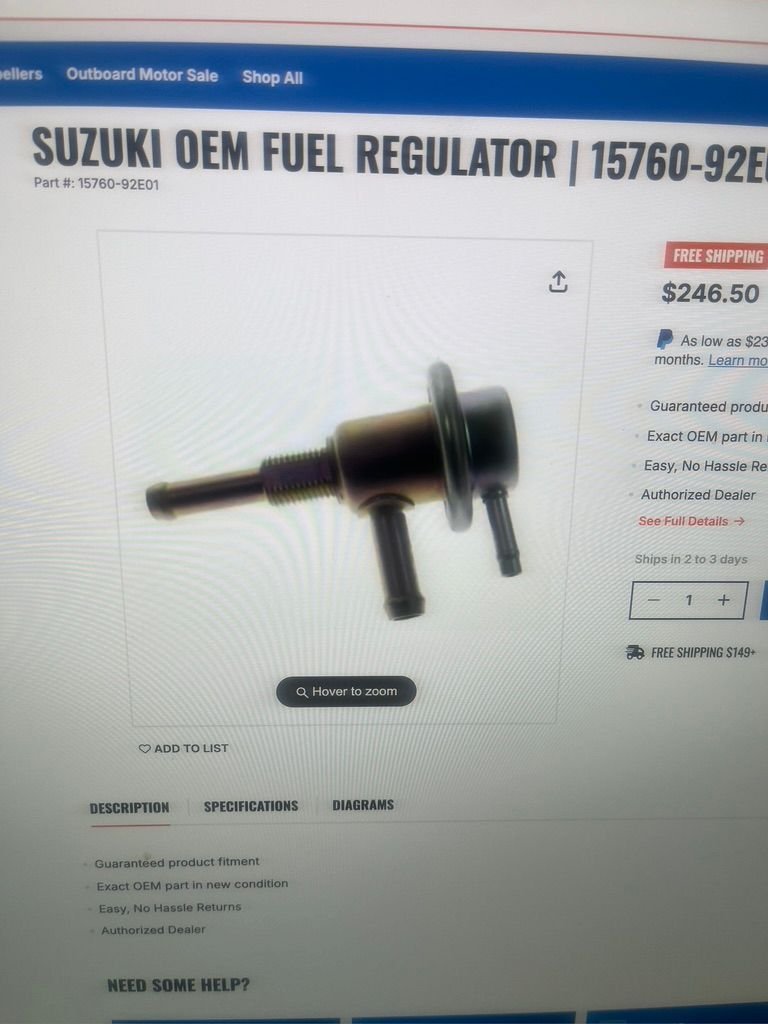
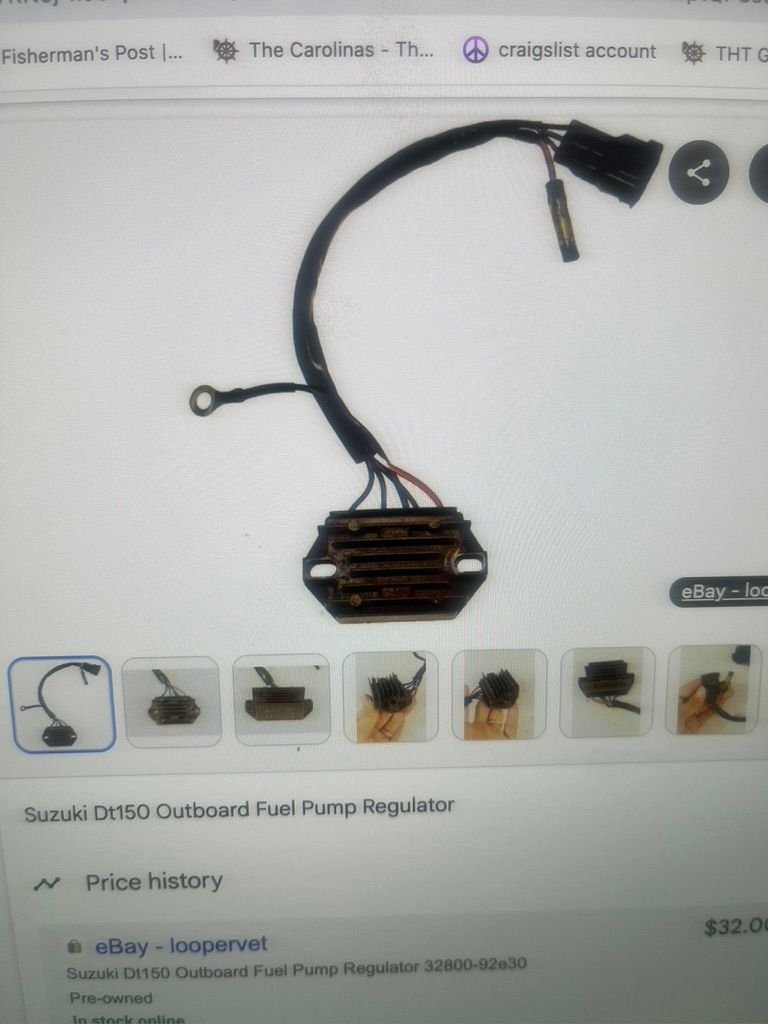
The motors have something that looks like the fuel pressure regulator in the first photo, a couple of inches above, and connected to, the vst on the port side of the motor, and the fuel pump regulator on the other side.
I bought the boat last September, and have been out the inlet maybe seven or eight times since then, and come back on one engine three times. The first two times the port engine died, but this last time it was the starboard engine. It runs fine on the way out, cruising around 3500 RPMs, but it will hit about 5200 if pushed. The first time there was water in the fuel separator, and I have replaced both, and drained them several times since, without a drop of water showing.
The symptoms are that it will suddenly start rapidly dropping RPMs, and will stall, and not restart. But, they always restart the next morning, when I go to the slip to try to diagnose the problem.
There have been other times, when I can feel it start losing power, and by working the throttle, I can build it back up, and it will run fine. That happens mostly after I have been trolling, and then try to accelerate.
This problem extends back to the previous owner, who only had the boat for a short time, after it had been stored for a few years, after the original owner died. He replaced all fuel lines from the tanks to the engines, and replaced the fuel pumps, and the fuel water separators.
I know there are all kinds of questions about tank vents, hoses, air leaks, etc., and I may have to work through all of those things again, but let’s start with fuel pumps.
These motors have three fuel pumps, one electric pump external to the VST, and two diaphragm pumps on the side of each engine. Everything that I read says that you should hear that electric pump prime itself when the key is turned on. I have four electric pumps, two that the previous owner installed, and the two original Suzuki pumps that he removed. All four run, when bench tested with a battery. The way that I am testing them on the boat is to unplug the two wire connection to the pump, turn the ignition on, and then go back and plug the pump in, with one hand on the pump. I hear nothing, and feel nothing, from any of the four pumps, although the engine will crank and run in the slip. And it will die 2 to 3 seconds after I unplug that pump. I don’t know if that is from lack of fuel, or whether that electrical connection is necessary for the engine to run.
The two wires going to the fuel pump are red, and black with a thin red stripe. When I test those two wires will a multimeter, I get a constantly changing number beginning with a decimal, which looks like millivolts. When I ground the black wire from the multimeter to the block, I get 12 V. I can’t find an explanation for a black wire with a red stripe on the web, I thought it might mean that the pump was self grounding, but grounding the body of the pump to the block did not make it run. Is there a switch, or relay, somewhere which sends that black with red stripe wire to ground, and turns on the pump? I now know that there is a fuel pressure relay, but I’m not sure what it does. Does the electric fuel pump run constantly constantly when the motor is running, or does it turn on and off from fuel pressure, like a water pump on the freshwater system? And if so, where is the trigger? I have a fuel pressure gauge, but could not find a Schrader valve on the motors to check the line pressure. I was going to pull the line off the pump with the motor running, just to see how much fuel it was moving, but I was hanging over the back of the boat in the slip, and it didn’t seem like a good idea at the time.
Is it possible for a EFI motor to run, even poorly, and at low RPM, on just the two diaphragm pumps on the side of the block?
I got the boat back on the trailer, and into my driveway this morning, before I had to leave, so trying to plan the next steps for when I get back down there in a few days. I know that VST’s are in my future, but I am waiting for gaskets before I open them up. TIA!
The motors have something that looks like the fuel pressure regulator in the first photo, a couple of inches above, and connected to, the vst on the port side of the motor, and the fuel pump regulator on the other side.