

Pondering a couple questions for the collective mind. They are mostly academic. Has to do with design of pre-alpha exhaust system. See pictures for clarification.
1. What purpose do the small holes at the bottom of the outlet have? I know they route a portion of the exhaust through the gimbal housing where it exits externally on each side. But why? There must have been some good engineering reason. Is it just a “bypass” in case the through-hub gets clogged? That seems extremely unlikely to me. My model already allows that anyway due to the exhaust bellows being the type that allows bypass at the bell housing. What was the compelling design concern here?
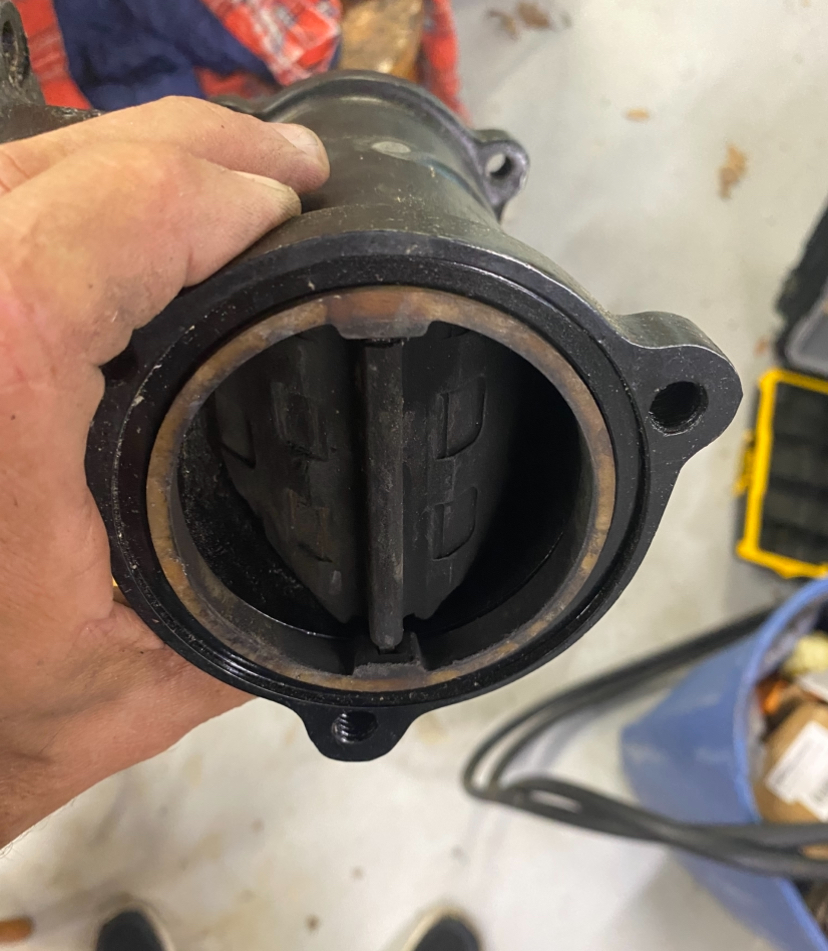
2. Presumably, the flapper check valves at the Y pipe connections are to prevent water running up into the engine under some extreme case where the engine is below the waterline (which seems kind of impossible, given the geometry of the setup, unless the boat is already sinking). From what I’ve seen, these things are way more trouble than they’re worth. They get frozen, or break off and foul the exhaust pathway, etc., and they create more back-pressure. And they can’t possibly make a water-tight seal after some period of operation. Does anybody here disable them?
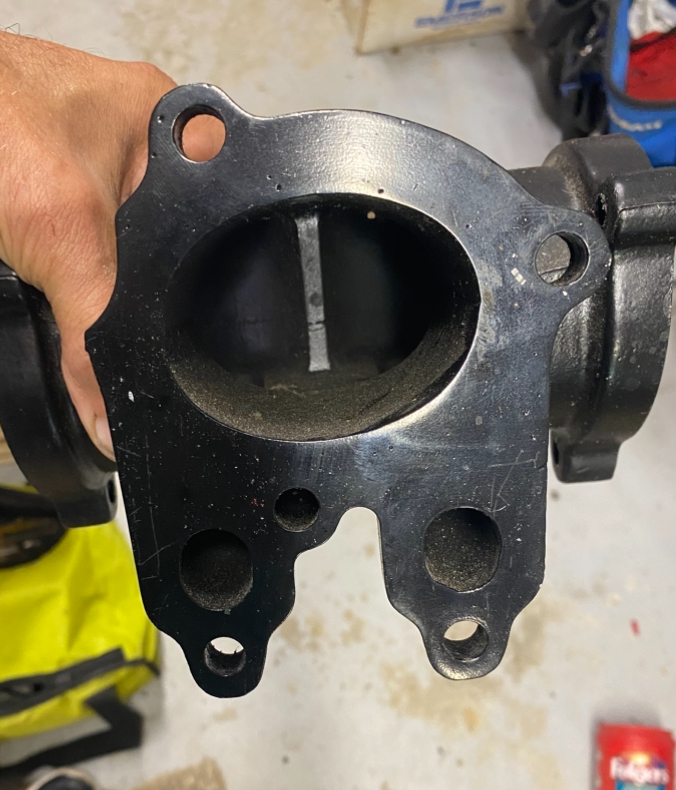
1. What purpose do the small holes at the bottom of the outlet have? I know they route a portion of the exhaust through the gimbal housing where it exits externally on each side. But why? There must have been some good engineering reason. Is it just a “bypass” in case the through-hub gets clogged? That seems extremely unlikely to me. My model already allows that anyway due to the exhaust bellows being the type that allows bypass at the bell housing. What was the compelling design concern here?
2. Presumably, the flapper check valves at the Y pipe connections are to prevent water running up into the engine under some extreme case where the engine is below the waterline (which seems kind of impossible, given the geometry of the setup, unless the boat is already sinking). From what I’ve seen, these things are way more trouble than they’re worth. They get frozen, or break off and foul the exhaust pathway, etc., and they create more back-pressure. And they can’t possibly make a water-tight seal after some period of operation. Does anybody here disable them?

