Logo

Milkshake oil - 454 big block

Maxum2300sr454

New member
Maxum 2300sr 2000mod
Bravo 3 drive, with a 454 7,4l Mercruiser carburetor big block (1996 I think).
Pictures at bottom.

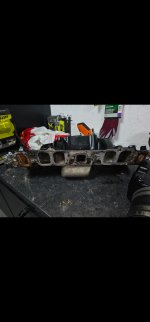
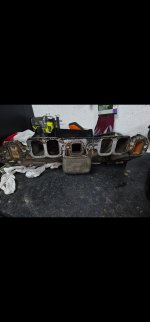
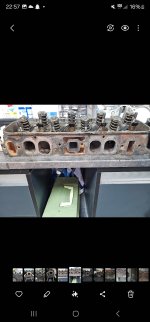
I've discovered water in the oil. Yeah, real milkshake. I've pulled intake and heads but can't see anything too obvious. Looking for help to spot anything telling from the gaskets, heads or intake etc.

Here's the story:
The engine has been running fine. I recently noticed some burnt smell because of oil/liquid leaking from the portside valve cover appearing at cruising speeds (2500-3000rpm) and above. When I slowed down to 5 knots the smell and smoke went away rapidly. So I've been driving at that speed the whole day etc. I figured it was just the gasket for the valve cover og exhaust that was leaking some.
But some days later I discovered the milky oil when checking the valve covers. Weird thing was that on the dipstick the oil was really fine and clear.

So i drained the oil, total of ca 5 liters, and looked dark / somewhat milkshaky but not like in the covers. So now I've pulled the intake and heads, but I can't see any blown gaskets. Can anyone see any clear signs on the pictures here? Is the rusty color on heads/gasket an indication on a blown gasket? Any suggestions appreciated. I will clean the gasket and check the planing of the heads soon.

To sum up:
Engine running fine at idle and cruising speeds.
But water in oil.
Plugs looked fine.
Engine is raw sea water cooled.
Risers had correct restricted flow gaskets.
I have a gone pcv valve which was broken on the outside but have siliconed it up, but looks too much to be condensation?
Theres no sign of oil in the water.
Headgaskets, riser, exhaust and intake gaskets were supposedly replaced 2 years ago by marine workshop.

So not sure whats causing the leak.

 
Last edited:
what do the intake sides of the heads look like?

pict of both sides of the intake port flanges may help, too?

the one pic of the intake coolant port loos suspect to me...but it may just be the angle/lighting of the pic...
 
Yeah, do you mean the part where it's a little bent and looks like som porous metal hole beside the water channel in the intake,?
 

Attachments

  • Screenshot_20250802_225638_Gallery.jpg
    Screenshot_20250802_225638_Gallery.jpg
    704.9 KB · Views: 34
  • Screenshot_20250802_225641_Gallery.jpg
    Screenshot_20250802_225641_Gallery.jpg
    758.3 KB · Views: 39
Last edited:
it was the pic in the first batch that was a closeup of the coolant passage.

a couple of intake runners, on the heads, look like they have seen water for a while given the rust that's present.

and a few of the pistons appears to be prettty carbon free - that suggests water has made it into the combustion chambers as well...

Still pondering a likely cause...best guess right now is intake gasket leaking water but it didn't read where you got much water out of the pan.
 
it was the pic in the first batch that was a closeup of the coolant passage.

a couple of intake runners, on the heads, look like they have seen water for a while given the rust that's present.

and a few of the pistons appears to be prettty carbon free - that suggests water has made it into the combustion chambers as well...

Still pondering a likely cause...best guess right now is intake gasket leaking water but it didn't read where you got much water out of the pan.
Yeah, and the hard part is figuring out if that rust is from earlier leaks or now. It was repaired 2 years ago for among other things water in engine/oil. So that rust could probably be from an older leak aswell?
But the rusty color here around the cylinder heads, doesnt that tell us that water has been traveling other places than where it should and not just the water channel?
 
Last edited:
the rust in the intake ports looks fresh to me...looks like more rust on one head with the inner runners and on the outer runners on the other head...this may line up with the different planes on the intake...so that may give some insight to the problem, too...

if you line up the cylinder heads with their gaskets, you might gain some more insight to the source for the corrosion on the deck surfaces...
 
Thanks for the replies! Will check it out some more.

Just wanted to double-check if I understood you right:

When you mention "different planes on the intake" — do you mean that the intake manifold might not be seating properly due to a mismatch in angle or height between the cylinder heads (like if one has been milled more than the other), causing poor sealing at the intake ports?


Or were you actually referring to deck flatness on the cylinder heads themselves, where they bolt to the engine block?


I think I'm going to soon clean of the gasket remains etc and try to measure the flatness
 
with the intake manifold, there are (usually) two planes that the inlet (from the carb's base)flow into; one plane feeds four cylinders and the other plan handles the remaining four cylinders...if the corrosion in the intake ports on the heads lines up with a single plane from the intake, then maybe the intake is a contributor.

hopefully, the heads were found to be straight when the gaskets were done a couple years ago...time will tell...
 
Ah, got it! Yeah it's a dual plane intake. But if you then mean that there could be corrosion inside the intake which again leads to water leaking into heads etc, shouldnt there be rust in the intake channels aswell? I cant see any rust inside those on the intake (see previous pics). So far I can only see rust outside the intakes water channels. And on the heads as we've established.
I was really hoping to a see a clear blown gasket or something - so far it's still a puzzle to me. Do you know if that milkshake could cause those rust-colors on the e.g head, or would that be more just water to create that corrosion?
 
depends upon the path the water took and the time is sat...honestly, I've never seen the milkshake in the galley without water in the crankcase.

I know the SBC, when raw water cooled, can have the intake rot out under the t-stat housing...can't say I've seen it on the BBC but most of what we see in the shop is SBC...
 
I would have the heads magnaflux checked for cracks that may not be visible. I don't know if they still call it that, but a machine shop can check the flatness or non warpage as well.
 
depends upon the path the water took and the time is sat...honestly, I've never seen the milkshake in the galley without water in the crankcase.

I know the SBC, when raw water cooled, can have the intake rot out under the t-stat housing...can't say I've seen it on the BBC but most of what we see in the shop is SBC...
Well it was just the first dipstick check, but surely it was in the crankcase aswell. I still think this water port in the intake just below the t-stat housing is suspicious, like it's dented somehow?
 
I would have the heads magnaflux checked for cracks that may not be visible. I don't know if they still call it that, but a machine shop can check the flatness or non warpage as well.
I've measured both heads and none of them allows a 004 measure blade to go underneath the straight edge, the .002 went kind of underneath one place. Measured diagonally across the whole head and other places as well.

The boat has been stored in a warm storage every winter, so I find it unlikely that the frost should have made cracks. Engine has not been overheating either. Although last year there was some misfires at higher rpm's because of incorrect timing.
 
the coolant port may be distorted...you can check those flanges just like the head. I'm guessing you don't have many details on the previous service work?

Looking at the intake again, it looks like aluminum...so you wont see any rust on it...

the fingernail scratch test on the gasket surfaces is also good for irregularity detects...
 
It's aluminium yes, weighs like 12lbs or something. It has the firing order stamped on in, so guessing it's the original one?
I've had it for 4 years now, and the service and repairs I had two years ago was repairing some water leakage through one of the risers.

The water passage there seems very much distorted indeed.
And to the right that dent/deformation, there's like an extra red RTV of some sorts filling up a hole / corrosion, as a substitute for missing cast because of the distortion. So i've scratched my way in there with a flat iron, like 2-3mm deep . Maybe this is actually quite obvious the reason for the milkshake 🤔

There's also a lot of oxidation near and around the termostat housing and gasket on the top of it.
 
Trying to find a new intake, but not sure if it's a must that it's a marine intake or not. Guess that's the preferred choice though. Boat runs exclusively in freshwater.
This should be a match with the Gen V ?
https://www.edelbrock.com/performer...FAcBSvvlVsd9B__gXUK5ajvGJqD5L01nHlq-V8USOn_hN

I see it's easier to get non-marine intakes as they're more common, there's e.g :
https://www.edelbrock.com/performer...0-big-block-checy-w-oval-port-heads-2161.html
But not sure that would be a match ? It says 1965-90 big block, and that's probably Gen/Mark IV ?
 
If its a fresh water boat, you really don't need the 'marine' versions for the lining of the water jacket...you do want the 'cast in' wedge plate to level out the carb...you can buy them as a separate part if needed.

I'm pretty certain you have a GEN V so the mating manifold is the best approach.

Given the new manifold cost, I'd be incline to zyglo (or what ever the state-of-the-art process is nowadays) the old part before sinking the money in a new manifold...that said, given the description, it may be bad enough to warrant replacement...
 
Okay, thanks for the info! I have an offer on the Edelbrock part #2561 Performer RPM Q-Jet marine intake manifold - and was wondering if I should strike or not. It should be a straight bolt on I guess. I will be replacing the old intake anyways.
 
Back
Top