Logo

K&N filter - anyone running them?

bobct

Advanced Contributor
I have a lot of room between the top of the flame arrestor and the bottom of my engine hatches. I'm tempted to get one of the 9" K&N marine filters which you would figure would allow for higher volume air flow. Plus, it's filtered more than the flame arrestor. I'm not on dirt roads that often so that would be a bonus :)

What do you guys think? I think I have the biggest flame arrestor at around 3" tall now.


Bob
 
We have been running K&N filters on a pair of ch 350 454's(1979) since about 1984. I change the engine oil twice a year, the engines have about 3,600+ hours on the clock and they run like a fine swiss watch. I attribute the engine life mainly to the K&N's.
Just because you are on the water don't think the air is clean.
Yes put the K&N filters on!
By the way there are large, 14"? USCG approved K&N's that couldn't hurt if you have room.
 
have run them on everything carbed and injected, like them better then the pancake arresters and CG loves the approval molded into the rubber ring.
 
If you were gonna run them, a boat is about the best application.
I don't see them as value added and doubt they will be (for most of us) as fuel prices continue to rise.
 
We have been running K&N filters on a pair of ch 350 454's(1979) since about 1984. I change the engine oil twice a year, the engines have about 3,600+ hours on the clock and they run like a fine swiss watch. I attribute the engine life mainly to the K&N's.
Just because you are on the water don't think the air is clean.
Yes put the K&N filters on!
By the way there are large, 14"? USCG approved K&N's that couldn't hurt if you have room.

What carbs do you have on your engines? I run 1981 Crusader's 454 (350hp) in my boat and would like to see if I can switch over to a better filter system. I assume the K&N filters also meet the flame arrestor designation.
 
We are running the original style rochester quadrajet carbs, (rebuilt of course) and the marine K&N's are Coast Guard approved. They are identified as such on the filter element.
Somebody correct me if I am wrong, but I believe an engine inhales something like 15,000 gallons of air for each gallon of gas so it doesn't take many abrasive pieces of dirt, sand, dust, carried in the intake air to eat up the cylinder walls and the K&N's really help in that respect as compared to the flame arresters , which might stop low flying birds and Florida gnats.
Plus they are really shiny and clean looking.
 
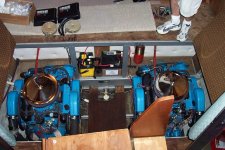
Here's what they look like. Purdy, ain't they!

Jeff
 

Attachments

  • Dan -10.JPG
    Dan -10.JPG
    59.7 KB · Views: 256
What is the cover made of? they do look pretty, but besides the decorative benefit, I don't see one for a boat. A road motor asked of frequent WOT would be different.
 
Hey those do look sweet ! Has there been any noticeable fuel savings? I have run them on my vehicles for years but really don't know if they save fuel or if there is any performance increase or not. But hey if they look good on my boat motor I'm all over it!:)
 
We are running the original style rochester quadrajet carbs, (rebuilt of course) and the marine K&N's are Coast Guard approved. They are identified as such on the filter element.
Somebody correct me if I am wrong, but I believe an engine inhales something like 15,000 gallons of air for each gallon of gas so it doesn't take many abrasive pieces of dirt, sand, dust, carried in the intake air to eat up the cylinder walls and the K&N's really help in that respect as compared to the flame arresters , which might stop low flying birds and Florida gnats.
Plus they are really shiny and clean looking.

I am also running the original style Rochester carbs. I will have to see if K&N have sizes close to the original flame arrestors. I do not have much room under the floor hatch's.
 
Back
Top