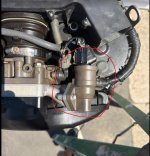
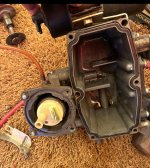
OK I just purchased a boat with a low hrs 550 actually honda Bf225A that has been sitting for about 8 years. I did a full service:
compression check all cylinders and they are close to like 200.
Lower unit oil
impeller
oil change, new filter
thermostats changed
new plugs
new low pressure fuel filter/bowl and gasket
new high pressure fuel filter/ gasket
Had the injectors pulled and tested
Had a new fuel pump and VST tank cleaned.
Low pressure pump was tested
new 02 sensor
New racor setup the whole thing
New fuel bulb
new fuel line
new tank breather
cleaned that valve with the screen at the top by the intake.
The motor is not throwing any codes
So motor runs at low speeds fine. And will rev to 5.5 - 6k when first running initally and for several hrs.
After about 4 hrs of running the motor will not push past 4 rpm. the further I push the throttle the worse it gets. Idles fine runs at lower rpms fine. It tries to go and will sporadically have burst of power but more often is choking or cutting out. I can rev it in neutral to over 5K no problem. under load it is not working.
here is what AI has been saying. I have feed it alot of information and I am hoping someone can help me diagnose this problem... It's difficult to have a shop check this because it take so long for it to show up...
Maybe someone has experienced this also?
Any help would be appreciated.
Since the low-pressure bowl is clear, all external/internal filters are new OEM, and the high-pressure fuel pump itself is brand new OEM, we've eliminated standard blockages and dead pumps.
However, the fact that it happens only after 3 to 4 hours of heat soak—and gets progressively worse the more throttle you apply—points right back to a severe fuel pressure collapse under sustained thermal load. Even with a brand-new pump, a few specific pressure-control and electrical breakdown points can cause this exact failure:
1.Test High-Pressure Fuel Rail Pressure Under Load (Hot):Estimated time: 20 mins.
Even a new pump can suffer if supply voltage sags or if heat causes internal pressure regulation failure. You need to verify if the fuel rail pressure holds steady at 43–50 PSI or if it plummets when the engine starts choking at 4000 RPM after 3+ hours.
Verification: Rig a temporary mechanical fuel pressure gauge to the Schrader valve on the rail and run a line where it can be monitored from the helm under way.
2.Inspect VST Cooler / Water Cooling Passages to VST:Estimated time: 15 mins.
The VST housing on the BF225 is jacketed and cooled by engine raw water to prevent the fuel inside from boiling or vaporizing during long runs. If the cooling water line feeding the VST jacket is partially restricted by salt or debris, the tank will heat-soak over several hours, causing the fuel inside to micro-boil and choke the system.
Verification: Feel the VST housing immediately after the 4-hour failure occurs—it should be warm, but if it is scorching hot to the touch, raw water cooling to the tank has failed.
3.Check PGM-FI Main Relay Thermal Breakdown:Estimated time: 15 mins.
The PGM-FI main relay supplies power to the fuel pumps and injectors. When these relays age, internal solder joints can micro-crack or warp under 3+ hours of under-cowl heat soak, introducing high resistance that drops voltage to the high-pressure pump under heavy demand.
Verification: Feel the PGM-FI relay housing when the fault occurs, or swap it with a known good relay to see if the symptom clears.
compression check all cylinders and they are close to like 200.
Lower unit oil
impeller
oil change, new filter
thermostats changed
new plugs
new low pressure fuel filter/bowl and gasket
new high pressure fuel filter/ gasket
Had the injectors pulled and tested
Had a new fuel pump and VST tank cleaned.
Low pressure pump was tested
new 02 sensor
New racor setup the whole thing
New fuel bulb
new fuel line
new tank breather
cleaned that valve with the screen at the top by the intake.
The motor is not throwing any codes
So motor runs at low speeds fine. And will rev to 5.5 - 6k when first running initally and for several hrs.
After about 4 hrs of running the motor will not push past 4 rpm. the further I push the throttle the worse it gets. Idles fine runs at lower rpms fine. It tries to go and will sporadically have burst of power but more often is choking or cutting out. I can rev it in neutral to over 5K no problem. under load it is not working.
here is what AI has been saying. I have feed it alot of information and I am hoping someone can help me diagnose this problem... It's difficult to have a shop check this because it take so long for it to show up...
Maybe someone has experienced this also?
Any help would be appreciated.
Since the low-pressure bowl is clear, all external/internal filters are new OEM, and the high-pressure fuel pump itself is brand new OEM, we've eliminated standard blockages and dead pumps.
However, the fact that it happens only after 3 to 4 hours of heat soak—and gets progressively worse the more throttle you apply—points right back to a severe fuel pressure collapse under sustained thermal load. Even with a brand-new pump, a few specific pressure-control and electrical breakdown points can cause this exact failure:
1.Test High-Pressure Fuel Rail Pressure Under Load (Hot):Estimated time: 20 mins.
Even a new pump can suffer if supply voltage sags or if heat causes internal pressure regulation failure. You need to verify if the fuel rail pressure holds steady at 43–50 PSI or if it plummets when the engine starts choking at 4000 RPM after 3+ hours.
Verification: Rig a temporary mechanical fuel pressure gauge to the Schrader valve on the rail and run a line where it can be monitored from the helm under way.
2.Inspect VST Cooler / Water Cooling Passages to VST:Estimated time: 15 mins.
The VST housing on the BF225 is jacketed and cooled by engine raw water to prevent the fuel inside from boiling or vaporizing during long runs. If the cooling water line feeding the VST jacket is partially restricted by salt or debris, the tank will heat-soak over several hours, causing the fuel inside to micro-boil and choke the system.
Verification: Feel the VST housing immediately after the 4-hour failure occurs—it should be warm, but if it is scorching hot to the touch, raw water cooling to the tank has failed.
3.Check PGM-FI Main Relay Thermal Breakdown:Estimated time: 15 mins.
The PGM-FI main relay supplies power to the fuel pumps and injectors. When these relays age, internal solder joints can micro-crack or warp under 3+ hours of under-cowl heat soak, introducing high resistance that drops voltage to the high-pressure pump under heavy demand.
Verification: Feel the PGM-FI relay housing when the fault occurs, or swap it with a known good relay to see if the symptom clears.