Logo

1998 Johnson 115 Fast Strike Vapor Separator Tank (VST) bypass?

Longarch

New member
Can this system be successfully done by adding a 4 - 7PSI electric fuel pump, heat protective hose sleeve to fuel lines, and a Wix 33041 fuel filter with restricted bypass returning to tank? If yes, is anyone able to help me identify the purpose of all the hoses attached to the VST? I have no need for the choke/primer solenoid. The VST has been nothing short of a headache and I ran the outboard for a short time directly by connecting the inlet fuel line to the two lines feeding the four carburetors.
 
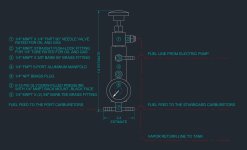
I was considering doing what I've drawn in the attached image. It should allow capture of any vapor bubbles and return them to the tank as well as ensure no bubbles reach the carbs and the whole circuit with exception of the lines from the VST to the carbs being constantly circulated thus negating any vapor bubbles. Thoughts?
 

Attachments

  • VST Replacement 2.jpg
    VST Replacement 2.jpg
    154.7 KB · Views: 19
What issues are you having with the VST that make you want to remove it? Personally I don't recommend an electric fuel pump on a carbureted outboard, but your AutoCAD drawing show's you have some skills. Have you already converted over to pre-mix and you're no longer using the VRO fuel pump? Also, why don't you have a need for a primer solenoid?
 
What issues are you having with the VST that make you want to remove it? Personally I don't recommend an electric fuel pump on a carbureted outboard, but your AutoCAD drawing show's you have some skills. Have you already converted over to pre-mix and you're no longer using the VRO fuel pump? Also, why don't you have a need for a primer solenoid?
The outboard was converted to the electric fuel pump prior to me purchasing it.
 
Agreed---Why do you not need the primer solenoid?
I do not need the primer solenoid with an electric fuel pump. I can control all I wish by what I intend to do. My only fear is blocking off an engine breathing tube. I think I have found two tubes that allow the crankcase to breath but wish to be certain prior to running it following the setup. I am sure I can remove and plug the yellow highlighted tubes in this image.
 

Attachments

  • VST Hoses.jpg
    VST Hoses.jpg
    298.2 KB · Views: 13
I think it only provides direct flow into the carburetor and therefore eliminating the need for a butterfly choke. I may be wrong.
I was almost correct. It delivers fuel directly into the intake providing bypassing the carburetor for a quick start up. In turn, this should provide a good pulse to pull fuel into the carburetors. ;)
 
The electric primer has nothing to do with filling the carburetors.----It is used on 9.9 to 300 HP motors.-----Far superior to the choke flappers.-----You need it on your motor for quick starting when used properly.
 
I do not need the primer solenoid with an electric fuel pump. I can control all I wish by what I intend to do. My only fear is blocking off an engine breathing tube. I think I have found two tubes that allow the crankcase to breath but wish to be certain prior to running it following the setup. I am sure I can remove and plug the yellow highlighted tubes in this image.
The electric fuel pump will only fill the carb chambers until the float needle closes and stops fuel flow. The primer shoots a stream of fuel directly into the intake, enrichening the fuel mixture, and enabling the engine to start easier when cold. In short, you need the fuel primer.
 
Well, frankly, I do not see a great need for a VST, or primer solenoid if you have an electric fuel pump. It takes more effort and time to have to pump the inline fuel primer bulb, go seat down and push your choke switch in while cranking than it does to sit down, turn the key to the 'ON' position, and wait for the pump's tone to change noting that the carb bowls are full and the boat is ready to crank. What huge advantage does the primer intake injection have over carburetors sitting with full bowls of gas. When the engine turns over, the gas from the bowls is pulled into the intake negating the need for priming. IDK? Just my thoughts. I guess we'll see. ;)
 
The wonderful electric primer valve is much mis-understood.------It is such a simple device that replaces choke flappers !-----Learn what it does is my suggestion.
 
Well, frankly, I do not see a great need for a VST, or primer solenoid if you have an electric fuel pump......turn the key to the 'ON' position, and wait for the pump's tone to change noting that the carb bowls are full and the boat is ready to crank. What huge advantage does the primer intake injection have over carburetors sitting with full bowls of gas. When the engine turns over, the gas from the bowls is pulled into the intake negating the need for priming. IDK? Just my thoughts. I guess we'll see. ;)
With the electric fuel pump:
1) Yes, the carb bowls will be completely full of fuel.
2) Yes, as you crank the engine the carbs will aspirate as much fuel as the air flow draws through the venturi.

What the electric fuel pump DOES NOT do is enrichen your fuel mixture for a cold start. That's where the primer solenoid shines. When you push in the key the solenoid shoots a stream of raw fuel into the intake that supplements the aspirated fuel from the carb to richen the mixture and improve cold start performance. The computers on all modern cars do this same thing starting on a rich fuel mixture then trimming out once the sensors tell the ECM operating parameters are met.

My 1996 Evinrude Intruder 150 starts perfectly every time. I still have the VST, primer solenoid, and VRO pulse diaphragm fuel pump. To cold start the engine I squeeze the primer bulb until firm and turn the key to ON and wait for the System Check lights to go out. Next I start cranking the engine for about 1 second then push in the key to engage the primer, and vroom it starts and idles immediately. No fuss, no muss. It doesn't matter if the temperature is 95 or 45, the engine starts this same way every time.
 
With the electric fuel pump:
1) Yes, the carb bowls will be completely full of fuel.
2) Yes, as you crank the engine the carbs will aspirate as much fuel as the air flow draws through the venturi.

What the electric fuel pump DOES NOT do is enrichen your fuel mixture for a cold start. That's where the primer solenoid shines. When you push in the key the solenoid shoots a stream of raw fuel into the intake that supplements the aspirated fuel from the carb to richen the mixture and improve cold start performance. The computers on all modern cars do this same thing starting on a rich fuel mixture then trimming out once the sensors tell the ECM operating parameters are met.

My 1996 Evinrude Intruder 150 starts perfectly every time. I still have the VST, primer solenoid, and VRO pulse diaphragm fuel pump. To cold start the engine I squeeze the primer bulb until firm and turn the key to ON and wait for the System Check lights to go out. Next I start cranking the engine for about 1 second then push in the key to engage the primer, and vroom it starts and idles immediately. No fuss, no muss. It doesn't matter if the temperature is 95 or 45, the engine starts this same way every time.
I see your point and appreciate the in-dept lesson. ;)
 
Back
Top